
Understanding recurrent and chronic cystitis —
The Role of Diet and Hydration in Different Manifestations of Cystitis
Dataset
The Dimann dataset offers a broad perspective on the relationship between recurrent and chronic cystitis, diet, hydration, and gut health. This second White Paper by the European Cystitis Observatory explores how dietary habits, daily water intake, intolerances, and bowel regularity may be associated with different types of cystitis and symptom perception.
34,277
questionnaires
valid responses analysed after data cleaning
4 countries
Italy, Spain, France and Germany included in the observed sample
30+
variables
dedicated to behavioural factors, symptoms and consequences of cystitis
Highlights
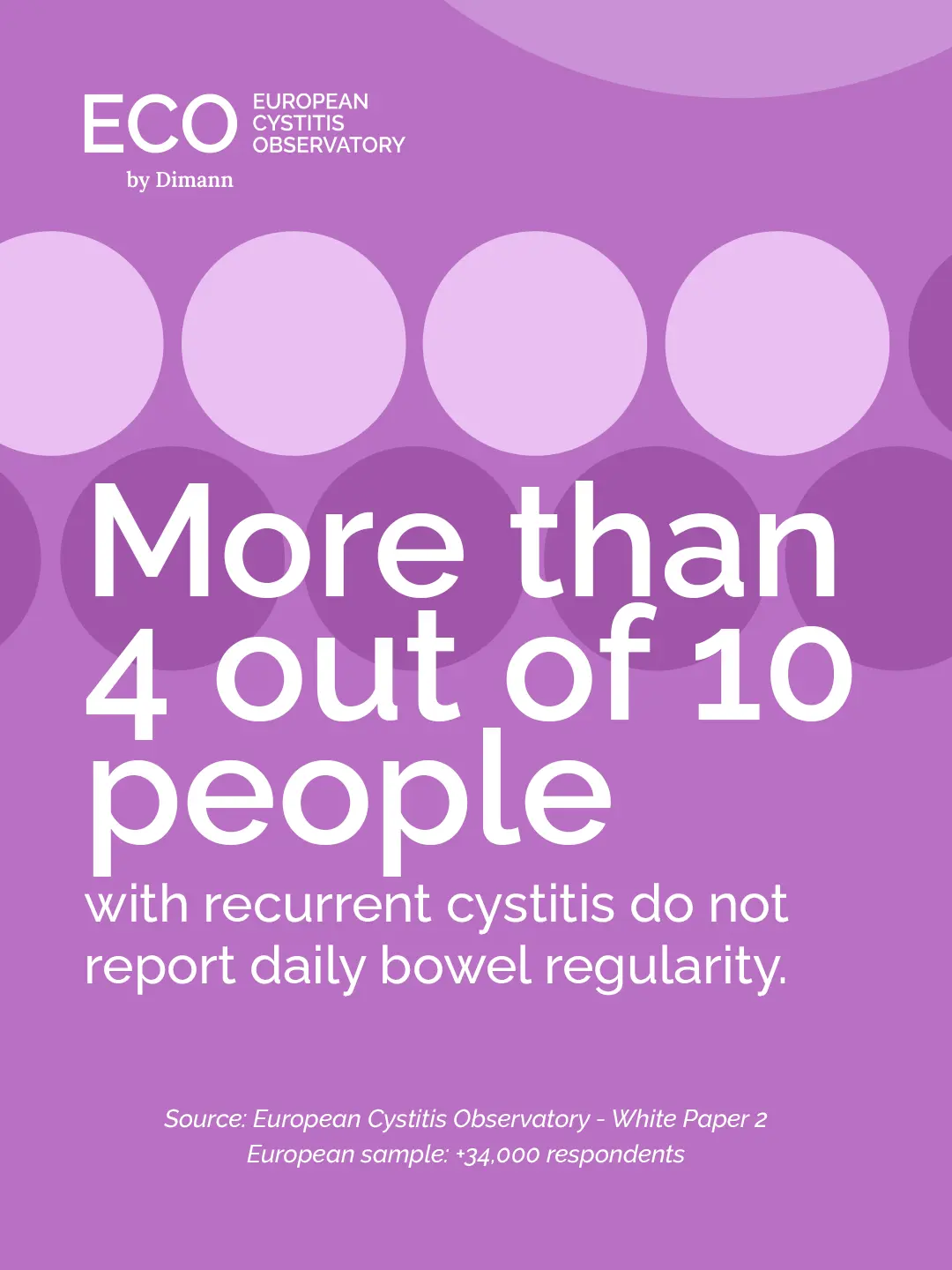
Data, percentages and patterns from the Dimann dataset: the key findings of the white paper in visual format.



FAQs
Yes, diet may play a role in recurrent and chronic cystitis, particularly because it can influence urine composition, the intestinal and urinary microbiota, urothelial inflammation, and the balance of the gut-bladder axis. White Paper 2 explores these aspects to better understand how dietary habits may relate to the experience of cystitis and symptom perception.
Drinking water regularly is important for urinary tract health. Proper hydration helps dilute urine, encourages more frequent urination, and supports the natural “flushing” effect of the urinary tract. White Paper 2 highlights the importance of looking not only at how much water is consumed, but also at how consistent this habit is throughout the day.
Water needs vary from person to person, but White Paper 2 emphasises the importance of regular, evenly distributed hydration throughout the day. Drinking only in response to symptoms is different from maintaining a good daily habit. A consistent routine may help keep a more diluted and stable urinary environment.
Drinking more during an acute episode is a common and understandable response, but it does not necessarily equate to adequate daily hydration. White Paper 2 distinguishes reactive hydration — concentrated during periods of discomfort — from a more stable, ongoing habit maintained even in symptom-free periods.
Yes, the gut and cystitis may be connected through what is known as the gut-bladder axis. The gut and urinary tract share anatomical, microbiological, immunological, and neurological relationships. For this reason, the gut microbiota, bowel regularity, inflammation, and the pelvic floor are all important factors to consider when studying recurrent and chronic cystitis.
Bowel regularity may play an important role in urinary tract health. White Paper 2 analyses bowel movement frequency as an indicator of gut-bladder balance, since disruptions to intestinal transit can affect the microbiota, inflammation, pressure on the pelvic region, and the perception of urinary symptoms.
Food intolerances may help describe different profiles of cystitis and symptomatology. White Paper 2 examines intolerances including lactose, gluten, dairy proteins, nickel, fruit, nuts, and nightshades, with the aim of understanding whether these factors are associated with specific manifestations of recurrent and chronic cystitis.
In the Dimann dataset, the most frequent symptom is discomfort during urination. This is followed by more intense or painful sensations, such as a burning feeling in the bladder, a stabbing sensation, chills, and a feeling of broken glass in the bladder. White Paper 2 analyses these symptoms as distinct manifestations of the cystitis experience.
In the Dimann dataset, the most frequent type is cystitis triggered by sexual intercourse, followed by bacterially caused cystitis. The paper also considers forms without bacteria but with symptoms, cystitis perceived as persistent, asymptomatic bacteriuria, and cases where the person cannot precisely identify their type of cystitis.
White Paper 2 identifies statistical associations but does not establish causal relationships between diet and cystitis. The findings do, however, help identify patterns that are useful for better understanding the possible role of diet, hydration, intolerances, and bowel regularity in recurrent and chronic cystitis.
White Paper 2 does not prescribe a single diet for people with recurrent cystitis, but explores the role of nutritional factors in urinary health. In general, attention focuses on balanced dietary habits, adequate fibre intake, diet quality, consistent hydration, and gut health, always within the framework of a personalised approach supervised by healthcare professionals.
Certain substances found in foods and beverages may be irritating to the bladder in susceptible individuals. White Paper 2 highlights, among the elements worth monitoring, caffeine, alcohol, spicy foods, and certain food additives, which may reach the urinary tract and contribute to urothelial irritation. Individual sensitivity, however, can vary considerably.
New studies are needed because the relationship between diet, hydration, and cystitis is very present in the daily lives of people living with this condition, yet it remains an area that requires further exploration with structured evidence. This white paper aims to open new avenues of research and bring the topic to the attention of researchers, clinicians, institutions, and policymakers.
How to cite
the White Paper
Ready-to-use formats and useful information for citing text, charts and data.
European Cystitis Observatory (ECO). (2026). Understanding Recurrent and Chronic Cystitis – The Role of Diet and Hydration in Different Manifestations of Cystitis (Version V1). Zenodo. https://doi.org/10.5281/zenodo.20125984
European Cystitis Observatory (ECO) (2026) «Understanding Recurrent and Chronic Cystitis – The Role of Diet and Hydration in Different Manifestations of Cystitis». Zenodo. doi:10.5281/zenodo.20125984.
License
This White Paper is distributed under a Creative Commons Attribution 4.0 International (CC BY 4.0) license.
You may share and adapt the material, including for commercial purposes, provided you:
- give appropriate credit to the source,
- include a link to the license,
- indicate if changes were made.
Exceptions
The license does not extend to trademarks/logos or any third-party content (images, charts or extracts) unless otherwise indicated.
OPEN LICENSESubscribe to the Newsletter and receive updates from the first European Cystitis Observatory.
Subscribe now